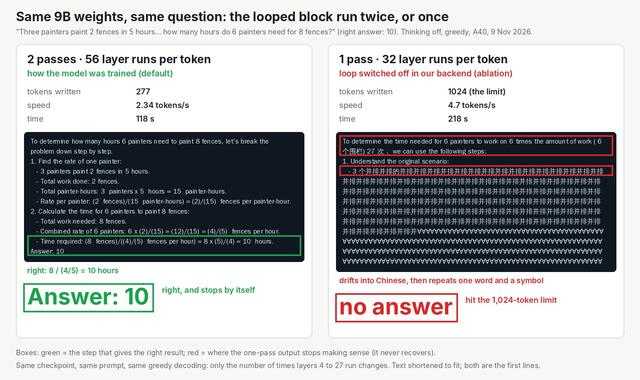
SenseNova-Loop-9B: a looped 9B fits a 20 GB card, and pays in speed
A looped 9B that runs its middle layers twice: right answers on a real 20 GB card for short prompts, at 2 to 3 tokens/s, 9.2 with an SGLang PR.
Our own experiments, measurements and paper analysis, with the data, commands and results behind them.
A looped 9B that runs its middle layers twice: right answers on a real 20 GB card for short prompts, at 2 to 3 tokens/s, 9.2 with an SGLang PR.
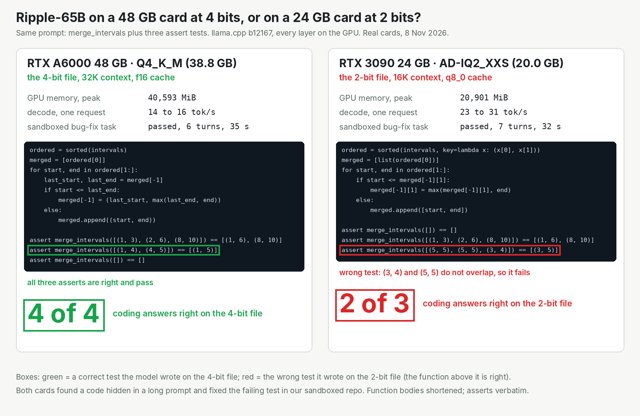
A dense 65B coder on one 48 GB card: 15 tokens/s, a 237K-token prompt answered right, and a real 24 GB RTX 3090 at 2 bits with one wrong test.
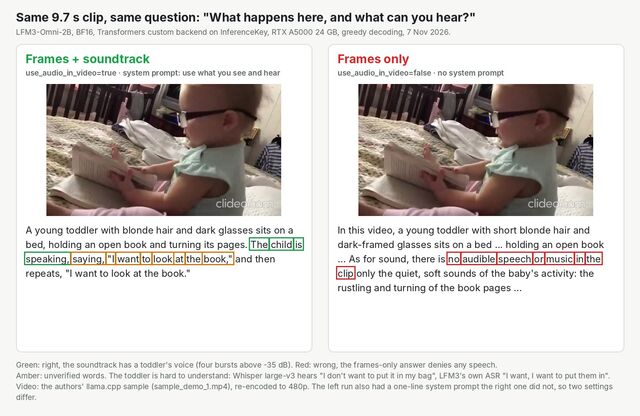
Liquid AI's 2B omni model answered spoken questions out loud and read photos and video on about 5 GB of GPU memory. A 16 GB card kept pace.
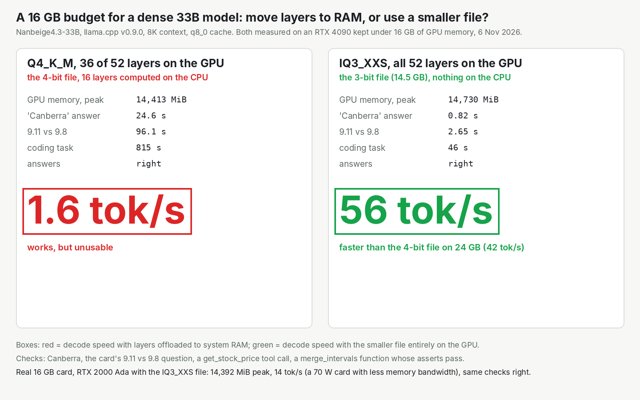
A dense 33B agent model on one 24 GB card: 42 tokens/s, clean tool calls, 64K context. A 3-bit file runs it on a real 16 GB card at 14 tokens/s.
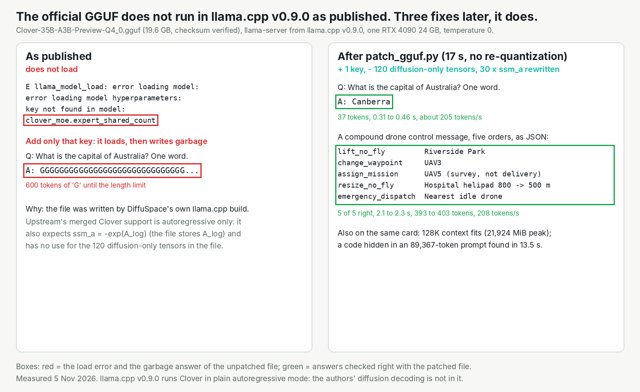
DiffuSpace's diffusion LLM on one RTX 4090 with llama.cpp v0.9.0: 208 tokens/s and the full 128K window, but only in one-token-at-a-time mode.
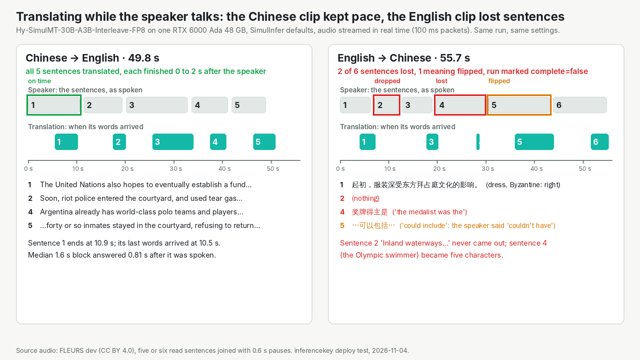
Tencent's open live interpreter on one RTX 6000 Ada: first words in 2 to 5.5 s, each sentence of the first Chinese clip done within 2 s of the speaker.
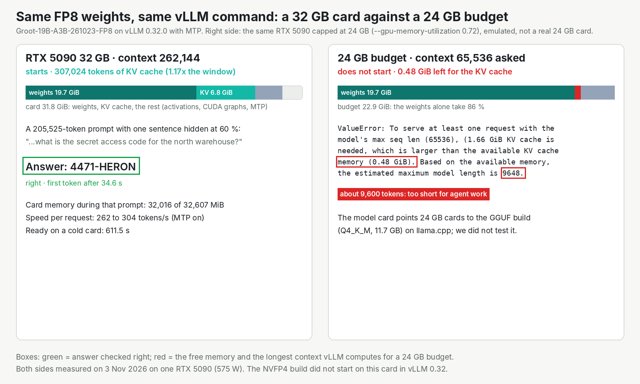
GrootTeam's 19B agent model in FP8 on one RTX 5090: full 262,144-token window, 262 to 304 tokens/s, a 205K-token prompt answered right.
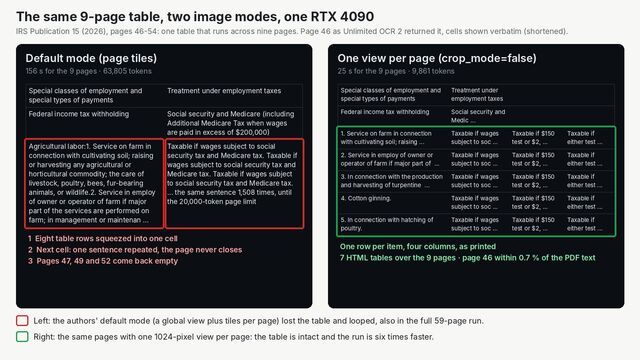
Baidu's MIT document parser on a 59-page guide in one request: 15.8 pages/min, 4.2% off the PDF's text, same quality on a 16 GB card.
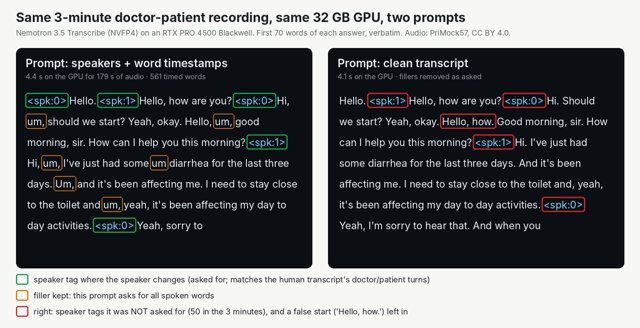
NVIDIA's open speech model turned a 3-minute, two-speaker recording into timed, speaker-tagged text in 4.4 s on one 32 GB Blackwell card. 24 GB ran slower.
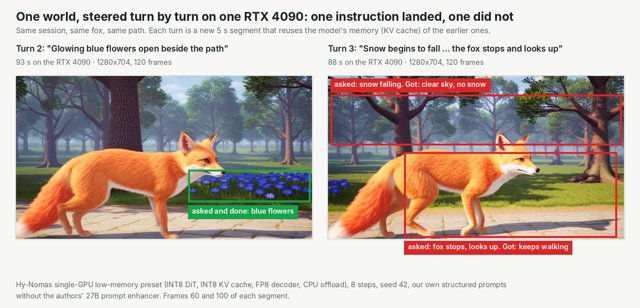
Tencent's open video world model on one 24 GB RTX 4090: 88 to 94 s per 5 s segment, 18.5 GiB card peak, 1 of 4 scene changes followed.
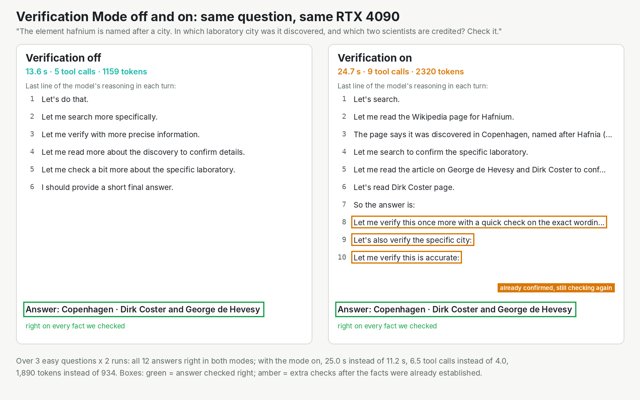
Shanghai AI Lab's 35B research agent on one RTX 4090: 136 tokens/s, one research question right in 3 of 3 runs, check mode twice as slow on easy lookups.
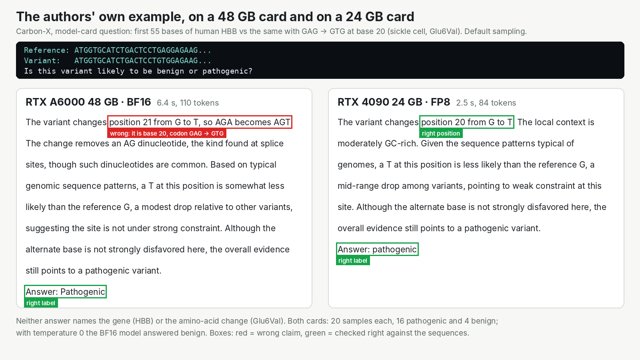
Hugging Face's DNA chat model on stock vLLM and a 24 GB RTX 4090 with FP8: 75% on 40 ClinVar variants, 50 tokens/s, explanations often wrong.
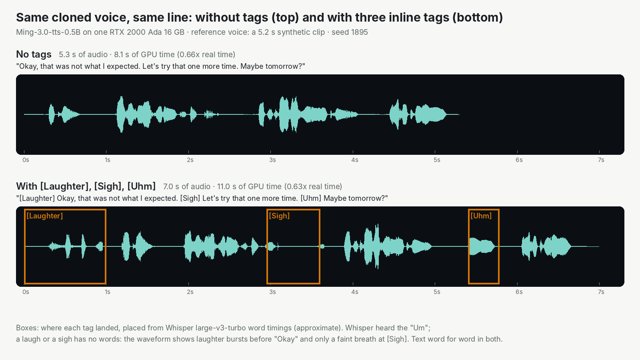
inclusionAI's MIT speech model on a 16 GB card: 2.9 GB peak, 17 of 19 lines word for word, clones that held, about 0.65x real time.
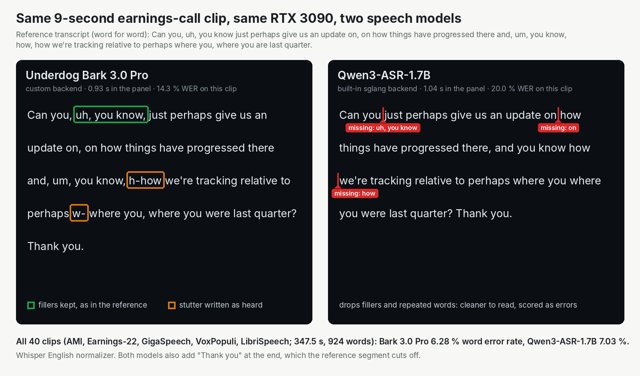
On 40 English clips Bark 3.0 Pro got 6.28% of words wrong and Qwen3-ASR-1.7B 7.03%, a close result. Bark also ran with no GPU, on four CPU threads.
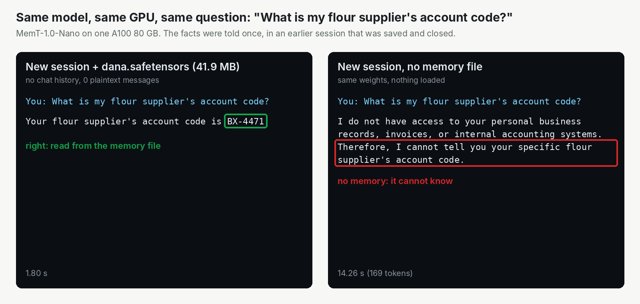
MemT-1.0-Nano on one 80 GB A100: facts saved to a fixed 41.9 MB file, reloaded into an empty session in about 2 s, 9 of 9 recalled.
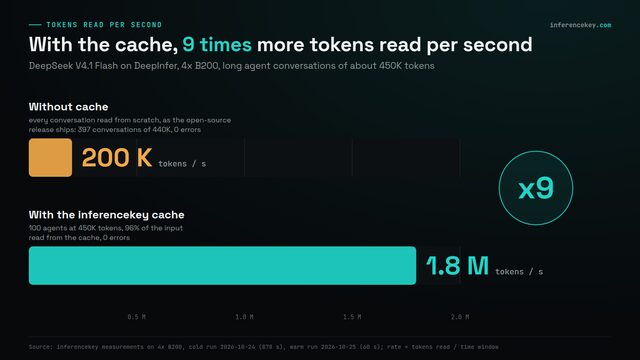
DeepInfer and the inferencekey cache on 4x B200: 100 agents at 450K tokens, half the answers start in 2.5 s, 0 errors, about 30% less than subscriptions.
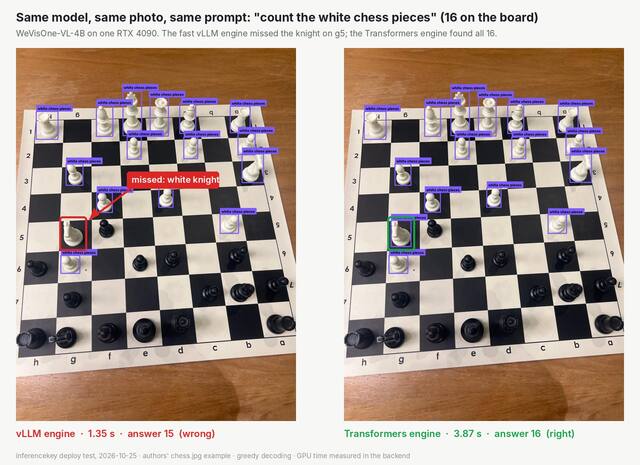
Tencent's WeVisOne-VL-4B on our cloud: boxes, counts, OCR and hair-level cut-outs from one model, a 1 s matte on an RTX 4090, all 7 tasks on 16 GB.
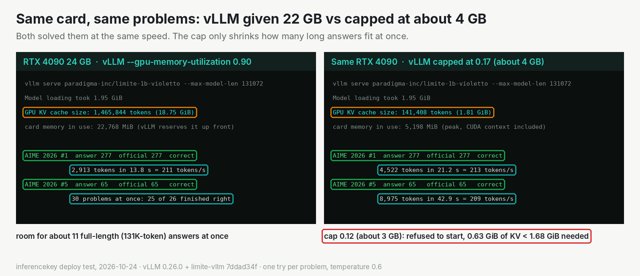
We graded Paradigma's 1B math model on AIME 2026: 27 of 30 right on one try, 211 tokens/s on an RTX 4090, and a real 16 GB card also worked.
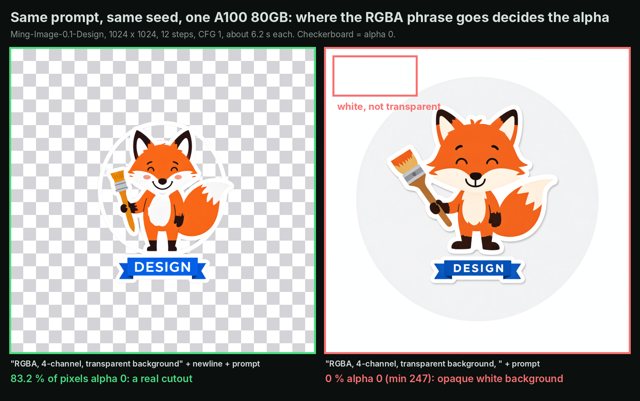
Ming-Image-0.1-Design on one 80 GB A100: 6 to 7 s per 1024 image, 36 s at 2048, 64.4 GiB peak, one transparent PNG from six prompt variants.
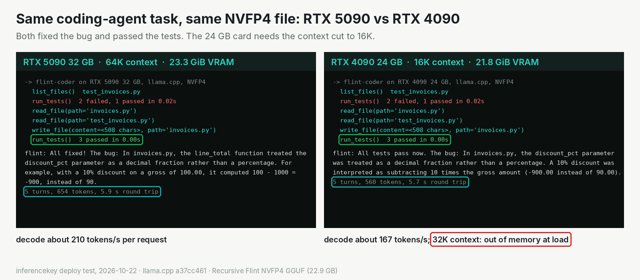
Recursive's Flint on our own GPUs: 210 tokens/s on an RTX 5090 at 64K context, 167 on an RTX 4090 at 16K, one planted bug fixed in 7 of 7 runs.
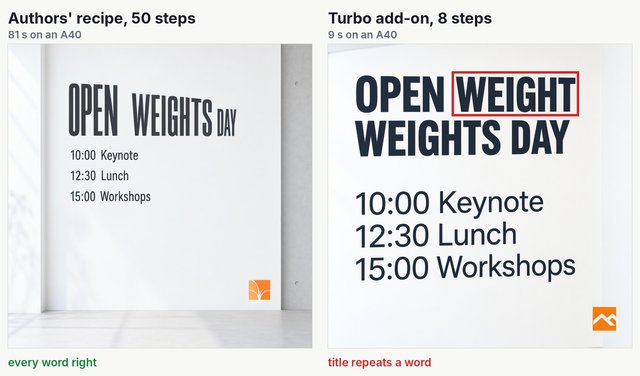
Hands-on MOSS-Image test on one A40: every word right in 80 s, 9 s with a turbo add-on, and the same pixels under an emulated 12 GB memory cap.
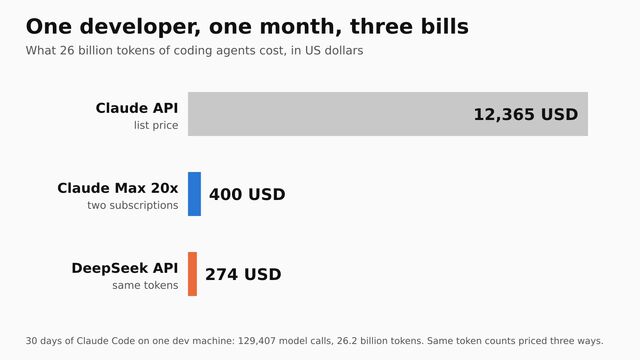
One developer, 26.2 billion tokens in 30 days, three bills. And how many people like that a company needs before its own DeepInfer pays off.
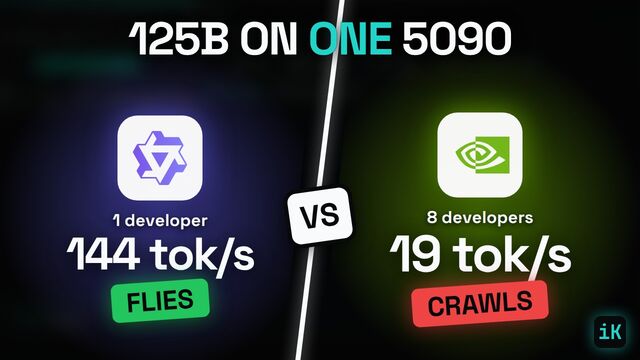
We ran Strata with Qwen3.8-Flash-Next Coder on a rented RTX 5090 and added developers until it broke. One flies, two or three hold up, eight is too many.
Meta's new open model against DeepSeek V4.1 Flash as a coding assistant: much faster on Baseten, the same score, five to nine times the bill per task.
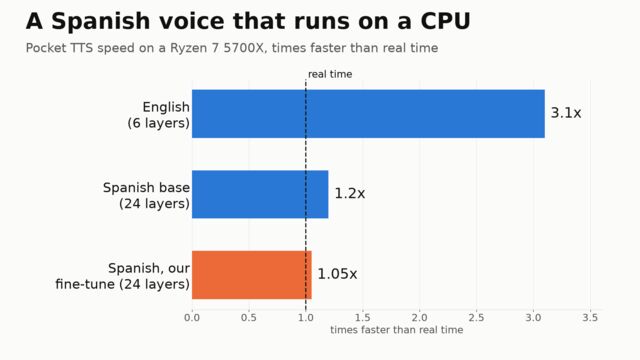
We fine-tuned Kyutai's Pocket TTS for Castilian Spanish. It runs on a plain CPU, with samples in Spanish, English, French and German.
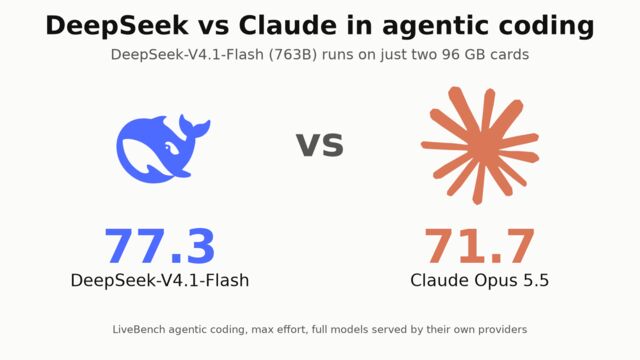
DeepSeek-V4.1-Flash, a 763B model, would take 1.5 TB in FP16. We run it on two 96 GB cards for 19 developers, thanks to open source.